It’s the second week into tech 336 and we spent our class learning some rather dry but important information about copyright, data hosting, privacy, and Open Educational Resources. Here is a definition from UNESCO that will help me remember what OER is:
Open Educational Resources (OER) are teaching, learning and research materials in any medium – digital or otherwise – that reside in the public domain or have been released under an open license that permits no-cost access, use, adaptation and redistribution by others with no or limited restrictions.
OER form part of ‘Open Solutions’, alongside Free and Open Source software (FOSS), Open Access (OA), Open Data (OD) and crowdsourcing platforms.
https://en.unesco.org/themes/building-knowledge-societies/oer
Searching for and using OER is beneficial to teachers because the resources can be used freely and openly without concerns about failing to comply with copyright laws. All you need to do is credit the person who created the content you are using. Basically, recognize that someone else’s hard work is making your job as a teacher that much easier. For example, I went to this website in search of some OER https://wordpress.org/openverse/?referrer=creativecommons.org and entered “water cycle” into the search bar. I was presented with over 10,000 results but chose one from the first page that looks like this:
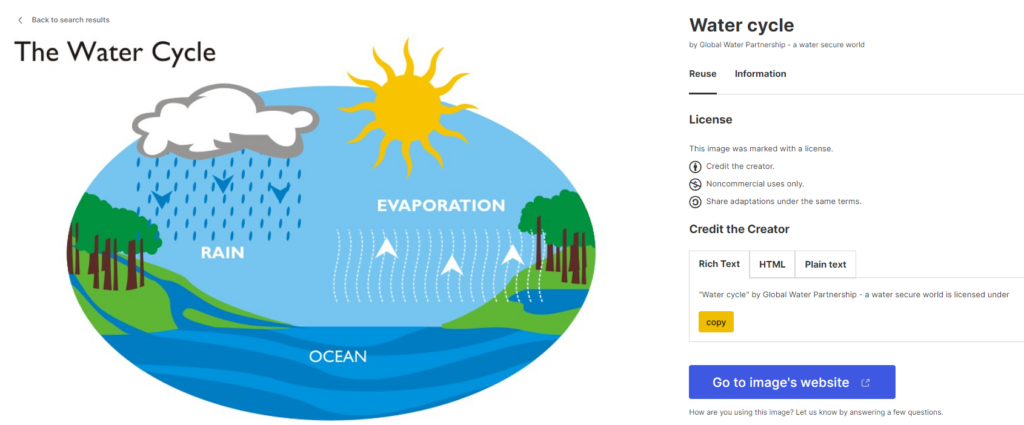
There was even a handy little tool where I copied the credit and pasted it right here in my blog under the borrowed image. When I go searching for resources to enrich my future classroom, I need to look for the Creative Commons licensing icons that communicate in which ways I can use the resources I have found. The icons look like this

and they are defined on the Creative Commons website. This is the place to go when I find myself asking what can I do with this great resource I just found? I now also have a better list of places to go for openly licensed images and resources. Here are a few:
The benefits of using OER include easy access to quality materials for teachers with the reassurance that they can be used freely without copyright concern and without investing personal finances to find excellent resources. And that means better learning environments for students.
Leave a Reply